Another Way to Say Following Up: 91+ Polite Alternatives for 2026 (With Examples)
Following up is a necessary part of professional life, yet the phrase itself can feel tired and, in the wrong tone, a little pushy. Whether you are waiting on a proposal, chasing an invoice, or reconnecting with a lead, the words you choose decide whether your message feels helpful or nagging.
The trick is to sound warm, brief, and useful. A good follow up reminds the reader, adds a touch of value, and makes replying easy. This guide gives you more than sixty polished alternatives grouped by situation, plus ready to use email lines, real examples, and the mistakes that make people hit delete.
How to Follow Up Without Sounding Pushy
The golden rule is simple: lead with value, not pressure. Mention something helpful, keep the message short, and give the reader an easy next step. One line of context plus one clear question beats a long paragraph every time. Timing matters too. Two to three business days after an email is usually safe, and a week is fair for bigger asks. Space your attempts out, and stop after two or three tries if you get no reply.
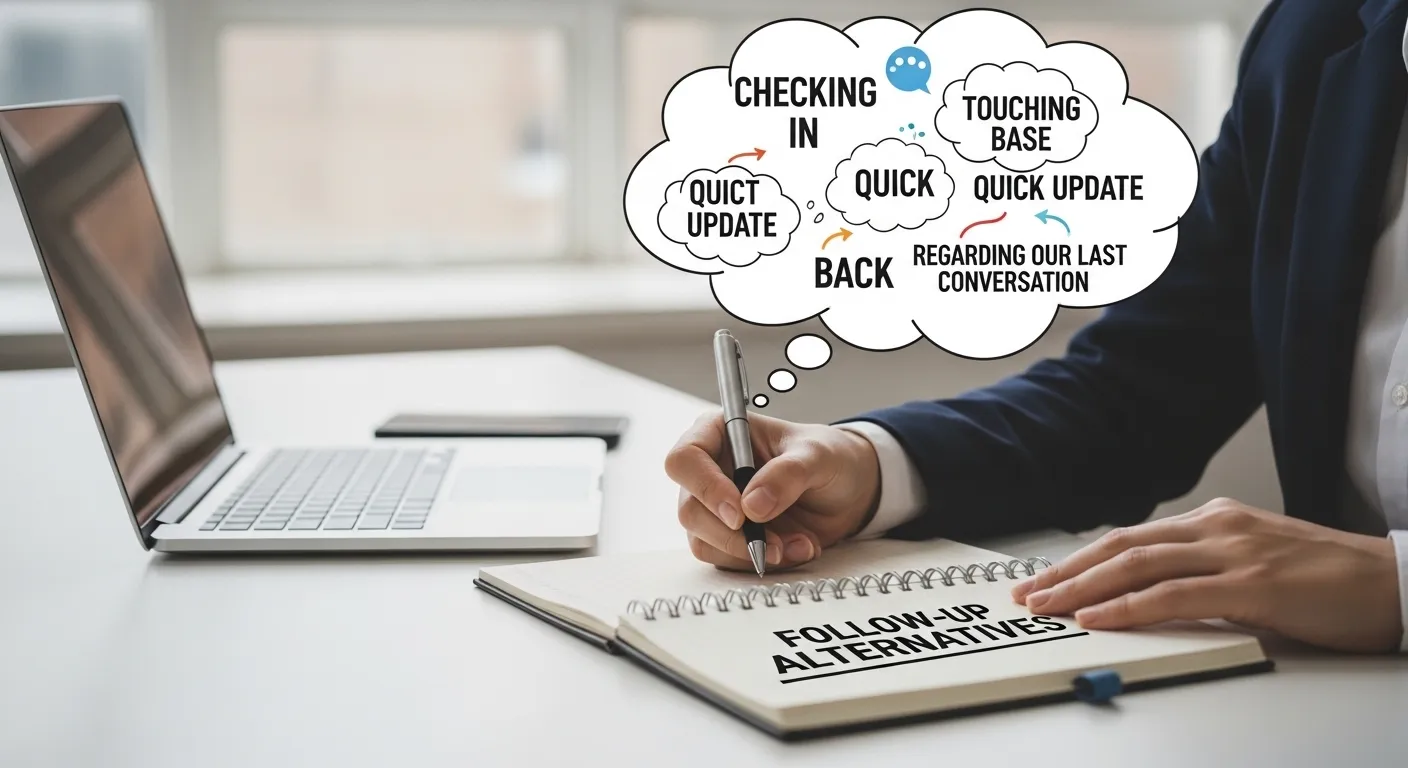
Gentle Check In Openers
Soft starters that reopen a conversation without any pressure.
- Circling back: the classic polite reopen. Example: “Circling back on the proposal I sent Tuesday.”
- Touching base: friendly and professional. Example: “Touching base about the project timeline.”
- Checking in: simple and warm. Example: “Checking in to see how the launch went.”
- Just bumping this up: casual, best for internal chats. Example: “Just bumping this up in case it got buried.”
- Dropping a line: relaxed and human. Example: “Dropping a line to see if you had any thoughts.”
- Reaching out again: honest and direct. Example: “Reaching out again about the contract.”
- Following through: shows reliability. Example: “Following through on our call last week.”
- Looping back: conversational and light. Example: “Looping back on the design feedback.”
- Checking progress: focused on movement. Example: “Checking progress on the quarterly report.”
- Seeing where things stand: gentle status ask. Example: “Seeing where things stand with the vendor.”
- Keeping you posted: promises future updates. Example: “Keeping you posted as the details come in.”
- Touch base again: signals continuity. Example: “Touch base again once you have reviewed it.”
- Quick follow up: short and clear. Example: “Quick follow up on my earlier message.”
- Giving a gentle nudge: disarming and polite. Example: “Giving a gentle nudge on the approval.”
Polite Reminder Phrases
When someone forgot, these reminders save face for everyone.
- Friendly reminder: warm and standard. Example: “Friendly reminder that registration closes Friday.”
- Gentle nudge: soft and effective. Example: “Gentle nudge on the timesheet.”
- Quick reminder: brief and neutral. Example: “Quick reminder about tomorrow’s meeting.”
- Heads up: casual alert. Example: “Heads up, the deadline moved to Monday.”
- Just a note: light and non urgent. Example: “Just a note that the link has changed.”
- Courteous reminder: formal and respectful. Example: “Courteous reminder of the payment due date.”
- Timely reminder: professional and purposeful. Example: “Timely reminder before the board meeting.”
- Polite reminder: safe for any audience. Example: “Polite reminder to submit your expenses.”
- Reminder note: plain and clear. Example: “Reminder note about the client call.”
- Light reminder: keeps the tone easy. Example: “Light reminder that the form is optional.”
- Prompting a response: direct but kind. Example: “Prompting a response before we finalize.”
- Small prompt: tiny and unthreatening. Example: “Small prompt in case this slipped by.”
Status and Update Requests
For when you genuinely need news, numbers, or a decision.
- Requesting an update: formal and clear. Example: “Requesting an update on the shipment.”
- Checking status: crisp and neutral. Example: “Checking status of the support ticket.”
- Status check: short subject line material. Example: “Status check on the campaign results.”
- Seeking feedback: invites opinion. Example: “Seeking feedback on the first draft.”
- Progress inquiry: professional and specific. Example: “Progress inquiry on the migration.”
- Hoping for an update: warm and patient. Example: “Hoping for an update when you have a moment.”
- Any news on this: casual and brief. Example: “Any news on this from the client?”
- Looking forward to your update: positive framing. Example: “Looking forward to your update next week.”
- Waiting on your reply: honest about the holdup. Example: “Waiting on your reply to book the venue.”
- Update needed: firm for internal use. Example: “Update needed before the standup.”
- Progress review: structured and formal. Example: “Progress review scheduled for Thursday.”
- Checking in on progress: supportive tone. Example: “Checking in on progress with the onboarding.”
Casual Follow Ups
For colleagues, clients you know well, and friendly professional relationships.
- Catching up: warm and relaxed. Example: “Catching up on the hiring plan.”
- Just popping in: brief and cheerful. Example: “Just popping in to say hello.”
- Checking how it is going: shows real interest. Example: “Checking how it is going with the new hire.”
- Quick catch up: promises brevity. Example: “Quick catch up on the budget.”
- Pinging you: modern and light. Example: “Pinging you about the file.”
- Dropping by: friendly and informal. Example: “Dropping by with the slides.”
- Following up casually: sets expectations. Example: “Following up casually on the invite.”
- Checking in casually: zero pressure. Example: “Checking in casually about Friday.”
- Seeing how things are: genuinely warm. Example: “Seeing how things are with the move.”
- Quick status check: efficient and clear. Example: “Quick status check on the tickets.”
Email Ready Follow Up Lines
Copy friendly sentences you can paste straight into your next email.
- I wanted to circle back on my last email. A polished opener that reminds without blaming.
- Just following up to see if you had a chance to review the proposal. Specific, polite, and easy to answer.
- Bumping this to the top of your inbox. Honest and a little playful, best for internal mail.
- I hope you are well, and I wanted to check in on the timeline. Warm opening before the ask.
- Any thoughts on the draft I sent over? Short, direct, and invites a reply.
- I wanted to make sure this did not slip through the cracks. Blames the busy inbox, never the person.
- Following up on our conversation last week. Anchors the message in shared context.
- Do you need anything else from my side? Shifts you from chaser to helper.
- I wanted to reconnect about the project timeline. Professional and forward looking.
- Just a quick nudge on the invoice from last month. Firm but friendly about money.
Gentle Push Alternatives
When time is running short, these add urgency while staying kind.
- A friendly prod: playful pressure. Example: “A friendly prod before we lock the schedule.”
- Light nudge: minimal pressure. Example: “Light nudge on the signature.”
- Soft reminder: tender and effective. Example: “Soft reminder that seats are limited.”
- Polite nudge: universally safe. Example: “Polite nudge on the survey.”
- Gentle ping: modern and casual. Example: “Gentle ping about the pull request.”
- Subtle check in: quiet but clear. Example: “Subtle check in on the deliverable.”
- Courteous follow up: formal and firm. Example: “Courteous follow up on the agreement.”
- Giving a gentle nudge: disarming opener. Example: “Giving a gentle nudge before Friday.”
Example Follow Up Emails
Client proposal: “I wanted to circle back on the proposal I sent last week. I am happy to walk through any section, or adjust the scope to fit your budget. Does Thursday work for a quick call?”
Job application: “I am writing to check in on my application for the marketing role. I remain excited about the position and would love to discuss how my experience fits your team.”
Internal task: “Quick status check on the homepage copy. I need it by Wednesday to keep the launch on track. Let me know if anything is blocking you.”
Unpaid invoice: “Friendly reminder that invoice 2041 is now due. You can pay through the link below, and please let me know if you need anything from my side.”
Common Mistakes to Avoid
- Sounding annoyed. Passive aggressive lines like “as I already mentioned” create tension. Assume the person is busy, not ignoring you.
- Following up with zero new value. “Just checking in” for the third time adds nothing. Share an article, a deadline, or a helpful resource instead.
- Writing a wall of text. Long follow ups get skimmed and skipped. Keep it under five sentences with one clear question.
- Over apologizing. “Sorry to bother you” frames your message as an interruption. A confident, kind tone works better.
- Following up too often. Daily messages feel like pressure. Space attempts by several business days and know when to pause.
The trick is to sound warm, brief, and useful. A good follow up reminds the reader, adds a touch of value, and makes replying easy. This guide gives you 91 polished alternatives grouped by situation, plus ready to use email lines, timing rules, subject line ideas, and the mistakes that make people hit delete.
The golden rule is simple: lead with value, not pressure. Mention something helpful, keep the message short, and give the reader one easy next step. One line of context plus one clear question beats a long paragraph every time. Timing matters too. Two to three business days after a standard email is usually safe, and about a week is fair for bigger asks like proposals. Space your attempts out, and stop after two or three tries if you get no reply. A polite closing note keeps the door open without burning the relationship.
Value First Follow Ups
These add something useful before they ask, so the message never feels empty.
- Thought you would want to see this: leads with value. Example: “Thought you would want to see this pricing breakdown.”
- Sharing a quick update since we last spoke: informative and warm. Example: “Sharing a quick update since we last spoke, the dates moved.”
- One more thought on: adds insight. Example: “One more thought on the launch plan.”
- In case this helps: generous framing. Example: “In case this helps, here is the checklist.”
- Wanted to pass along: casual and useful. Example: “Wanted to pass along the article we discussed.”
- New information on: signals fresh value. Example: “New information on the shipping delay.”
- Following up with one additional thought: builds on the last note. Example: “Following up with one additional thought about pricing.”
- I came across something relevant to: thoughtful and personal. Example: “I came across something relevant to your project.”
- A quick resource for you: helpful and short. Example: “A quick resource for you before Thursday.”
- Updating you on: positions you as helpful. Example: “Updating you on the revised timeline.”
For colleagues, familiar clients, and friendly professional relationships.
Firm and Final Follow Ups
When time is short and you need a clear answer, these stay polite while adding weight.
- Finalizing my schedule: creates a real deadline. Example: “Finalizing my schedule for next week, does Thursday work?”
- I need a decision by: clear and respectful. Example: “I need a decision by Friday to hold the slot.”
- Closing the loop on: signals the end is near. Example: “Closing the loop on the open invoice.”
- Should I close this out: the polite break up line. Example: “Should I close this out for now?”
- Last check before we move on: firm but fair. Example: “Last check before we move on to the vendor.”
- One last nudge before: warns gently. Example: “One last nudge before the early rate ends.”
- Wanted to confirm whether: seeks a yes or no. Example: “Wanted to confirm whether you are attending.”
- Still waiting on: states the fact calmly. Example: “Still waiting on the signed copy.”
- Time sensitive follow up: flags urgency. Example: “Time sensitive follow up on the approval.”
- Need your call on: puts the ball in their court. Example: “Need your call on the final design.”
Subject Lines That Get Opened
The subject line does most of the work. Short and specific wins every time. Try Quick question on the proposal, Thoughts on Tuesday’s draft, One update before Friday, or Should I close this out. Avoid using only the word Follow up as a subject, because it signals zero new value and busy readers skip it. Personalize with the topic, not the chase.
Wait two to three business days for a standard email, and about a week for a big request like a proposal. If the matter is urgent, a next day follow up is fine as long as you stated the deadline clearly in the first message.
What is a good subject line for a follow up email?
Short and specific wins: Quick check in, Following up on the proposal, or Any thoughts on Tuesday’s draft. Avoid vague subjects like Checking in with no context, since busy readers may skip them.
Not rude, but it is weak. The phrase gives the reader nothing new and can read as pressure. Replace it with a specific ask or a small piece of value, such as Sharing a quick update since we last spoke.
What is a polite way to follow up on an unpaid invoice?
Just a quick nudge on the invoice from last month is firm but friendly. Include the invoice number, the amount, and a simple payment link so the reader can act in one step.
How do I follow up on a job application without sounding desperate?
Keep it to two or three sentences and reference something specific from the interview or job description. Checking in on my application for the marketing role works when you add one line about why you remain excited about the position.
Following Up After No Reply Twice
Two silences need a graceful third message. Closing the loop on my side, unless you tell me otherwise is dignified. One last note, in case this got buried assumes good faith. I will pause here, the door stays open ends with grace.
Best use: after two unanswered notes, close the loop politely. A graceful close preserves the relationship, while a fourth nudge often burns it.
How to Follow Up With a Busy Boss
Busy bosses need follow ups that save time. Quick decision needed: approve A or B by noon is clear. One line summary, full detail attached for later respects the calendar. Reply with a thumbs up if this works makes answering effortless.
Best use: for bosses, put the decision, the deadline, and the easy reply in the first two lines. Busy people answer messages that take ten seconds, not ten minutes.
Following Up Lines for Job Applications and Hiring Managers
Following up on a job application shows interest, but the line must sound eager, not impatient. A good follow up thanks the reader, names the role once, and adds one small reason you fit, so the message feels helpful instead of pushy. Keep it short, keep it warm, and send it once, because a second nudge too soon can hurt more than help. The best timing is about a week after the application, when the team has had time to read it.
- I wanted to check in on the marketing role, and I remain excited about the team.
- Thank you for considering my application, I would love to hear the next steps.
- Just circling back on my interview last Tuesday, I am still keen to join you.
- I am writing to see if there is any update on the designer position.
- Following our chat at the job fair, I wanted to share my portfolio link again.
- I hope the hiring is going well, and I am happy to send any extra samples.
Following Up Lines for Friends, Family, and Personal Favors
Following up with friends and family is about care, not business, so the line should sound like a real person checking in. A warm question about their health, their trip, or the favor you asked keeps the bond strong without pressure. Add one small detail that shows you remembered, like the name of the doctor or the date of the move, and the message will feel like love instead of a reminder. Keep it light, keep it kind, and let them answer in their own time.
- Just checking in, how did the doctor visit go yesterday.
- Thinking of you after the move, is the new place starting to feel like home.
- Hey, did you get a chance to look at the photos I sent last week.
- Hope the week is treating you well, and let me know if you need a hand.
- Following up on my small favor, no rush at all, just whenever you can.
- I missed our chat, so I wanted to see how your mother is doing now.
More Questions Readers Ask
When should I follow up on a job application? About a week after applying, with one short warm message that thanks the reader and names the role once, so it feels helpful instead of pushy.
How do I follow up with a friend without pressuring them? Ask a warm question with one remembered detail, like the doctor visit or the move, and let them answer in their own time.
How many follow ups are too many? One polite follow up is right for most cases. A second is fine after a week of silence, but a third starts to feel like pressure.
Frequently Asked Questions
How soon should I follow up on an email?
Wait two to three business days for a standard email, and about a week for a big request like a proposal. If the matter is urgent, a next day follow up is fine as long as you state the deadline clearly in the first message.
How many times can I follow up without being annoying?
Two to three attempts is the sweet spot for most situations. Add something useful each time, like new information or a shorter question. If there is still no reply, send a polite closing note and move on.
What is a good subject line for a follow up?
Short and specific wins: Quick check in, Following up on the proposal, or Any thoughts on Tuesday’s draft? Avoid vague subjects like Checking in with no context, since busy readers may skip them.
Is it professional to say just bumping this?
It is fine for internal chats and colleagues you know well, but skip it with new clients or executives. Circling back or following up on sound more polished for formal audiences.
How to Choose the Right Alternative
Start with the setting. The best replacement for following up in a formal email is rarely the best one in a quick text, so decide where the line will be read before you decide which line to send.
Next, match the tone to your relationship with the reader. People you know well can handle playful and informal wording, while new contacts, managers, and clients usually respond better to steady and polite wording.
Finally, check the meaning. Say the alternative out loud in the full sentence. If it keeps the sense of following up, sounds natural, and needs no explanation, it is the right choice. If you have to explain it, pick a simpler one.
Follow Up Lines for Sales Leads and Networking
Sales and networking follow ups work when they offer value before asking for time. Mention one useful detail from the first conversation, then ask one short question that is easy to answer.
- Great meeting you last week, here is the resource we discussed.
- Circling back on our chat about your launch timeline.
- One quick idea for your team based on our conversation.
- Would a short call on Thursday help move this forward.
- Happy to share a brief example from a similar project.
Lead with the other person, not the sale. A helpful follow up earns a reply because it respects their time and their goals.
How to Close a Follow Up Sequence Gracefully
Closing a sequence is not giving up, it is leaving the door open with kindness. Send one final short note that thanks the reader, states that you will pause, and invites them to return whenever the timing is right.
- Thank the reader for their time in one line.
- State clearly that you will pause follow ups.
- Leave one easy way to reconnect later.
- Keep the note under four sentences.
- End with warmth, not guilt or pressure.
A graceful close often earns a late reply, because it removes pressure. Even when it does not, it protects the relationship for the next opportunity.
Conclusion
A great follow up is a small act of professionalism. It keeps projects moving, shows you care, and often earns a reply simply because it was kind and clear. Pick the phrases from this list that match your voice, space them out wisely, and your following up will never feel like nagging again.