Another Way to Say Important: 153 Strong Alternatives for 2026
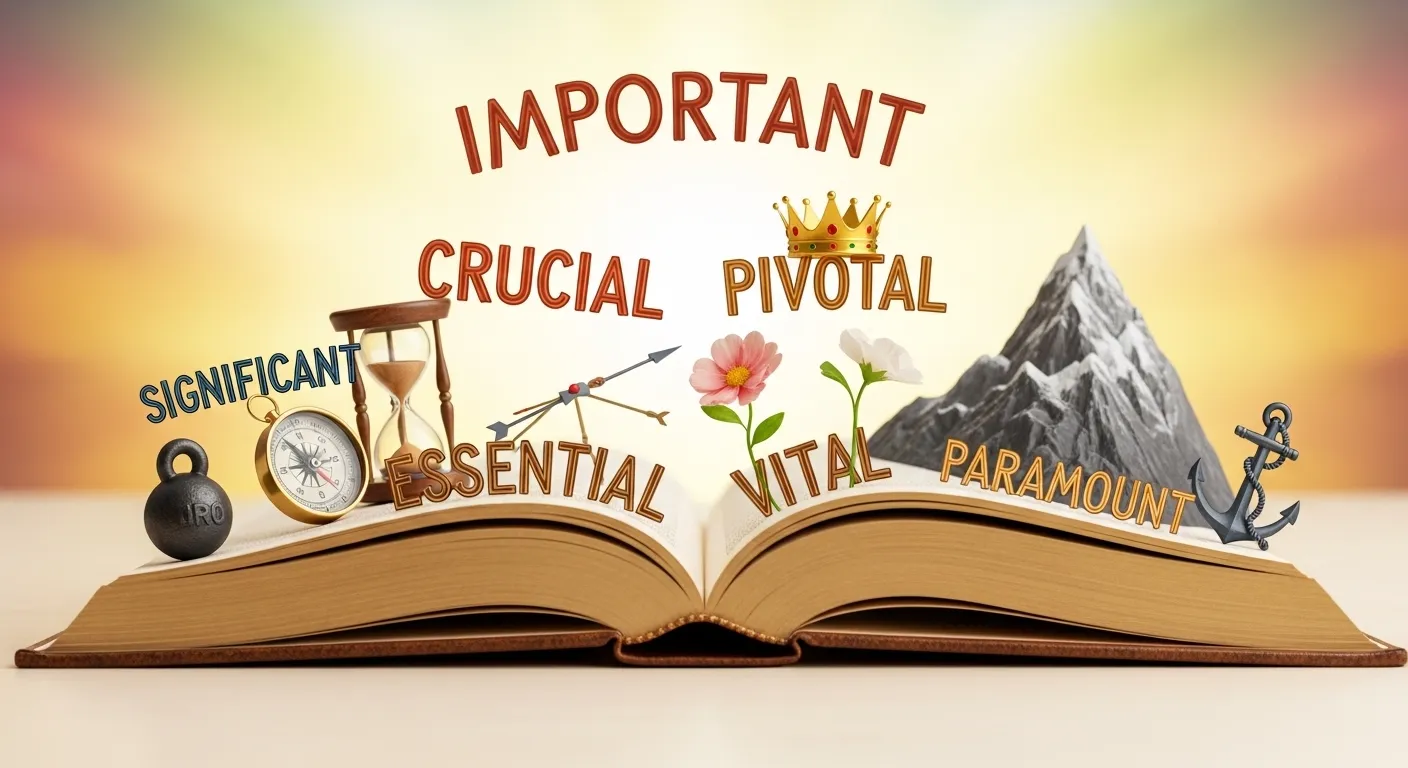
The word important does a lot of heavy lifting in English, and that is exactly the problem. When one word has to cover a critical deadline, a beloved grandmother, a key business decision, and a favorite restaurant, it starts to mean nothing at all. Readers glide past it. Listeners barely register it. If you want your point to land, you need a more precise word for the specific kind of importance you mean.
This guide gives you 153 alternatives organized by meaning and context. You will find words for urgent situations, formal academic writing, business communication, everyday conversation, emotional and personal moments, and creative expression. Each word comes with an example sentence, plus a guide to choosing the right register, common mistakes that weaken your writing, and FAQs that clear up the subtle differences between tricky pairs like crucial and critical.
Essential and Core Words
These foundational alternatives are the closest direct replacements for important. They work in almost any context where something truly matters.
- Crucial – Example: It is crucial that we submit the application before the deadline.
- Vital – Example: Clean water is vital to every community on earth.
- Critical – Example: The next forty eight hours are critical for the patient.
- Key – Example: Communication is the key factor in every strong relationship.
- Essential – Example: Sleep is essential, not optional, for good health.
- Pivotal – Example: That meeting was a pivotal moment in the history of the company.
- Paramount – Example: Safety is paramount on every construction site we manage.
- Fundamental – Example: Trust is fundamental to any lasting partnership.
- Indispensable – Example: She has become indispensable to the research team.
- Central – Example: Education plays a central role in reducing poverty.
- Primary – Example: Our primary goal this quarter is customer retention.
- Chief – Example: His chief concern was the safety of his crew.
- Principal – Example: The principal reason for the delay was the weather.
- Foremost – Example: She is one of the foremost experts in climate science.
- Decisive – Example: Your vote could be decisive in a race this close.
Urgent and Pressing Alternatives
Some things are not just important, they are time sensitive. These words add urgency and signal that action cannot wait.
- Pressing – Example: We have a pressing issue with the server that needs attention now.
- Immediate – Example: This requires immediate action from everyone on the team.
- Imperative – Example: It is imperative that you back up your files before the update.
- High priority – Example: Treat this ticket as high priority and resolve it today.
- Time sensitive – Example: This offer is time sensitive and expires on Friday.
- Compelling – Example: She made a compelling case for changing the strategy.
- Exigent – Example: The exigent circumstances required a same day decision.
- Acute – Example: The hospital faced an acute shortage of nurses that winter.
- Insistent – Example: There is an insistent demand for faster delivery times.
- Non negotiable – Example: Meeting the safety standard is non negotiable.
- Weighty – Example: This is a weighty decision with consequences for years.
- Momentous – Example: Signing the treaty was a momentous occasion for both nations.
Formal and Academic Options
Essays, research papers, and official documents need precise academic language. These alternatives sound scholarly without being obscure.
- Significant – Example: The study found a significant link between sleep and memory.
- Substantial – Example: There is substantial evidence supporting the new theory.
- Salient – Example: The salient point of the argument is often overlooked.
- Instrumental – Example: Her mentorship was instrumental in my career growth.
- Notable – Example: It is notable that both studies reached the same conclusion.
- Foundational – Example: These principles are foundational to modern economics.
- Integral – Example: Feedback is integral to the design process.
- Overarching – Example: The overarching theme of the novel is forgiveness.
- Cornerstone – Example: Honest reporting is the cornerstone of good journalism.
- Prime – Example: Location is the prime factor in the value of the property.
- Mainstay – Example: Agriculture remains the mainstay of the regional economy.
- Leading – Example: She is a leading voice in the debate on data privacy.
Business and Professional Terms
In the workplace, importance usually connects to goals, value, and results. These terms speak that language.
- Strategic – Example: This partnership is strategic for our expansion plans.
- Mission critical – Example: The payment system is mission critical and cannot go down.
- High stakes – Example: This is a high stakes negotiation, so prepare carefully.
- Key result – Example: Hitting this key result will define our quarter.
- Value added – Example: Focus on value added tasks and delegate the rest.
- Performance driver – Example: Customer reviews are our top performance driver this year.
- Major objective – Example: Launching in two new markets is a major objective for 2026.
- Decision driving – Example: This report contains decision driving insights for the board.
- Priority item – Example: Add the contract renewal as a priority item for Monday.
- Top priority – Example: Fixing the checkout bug is our top priority.
- High value – Example: These are high value clients who deserve extra attention.
- Key metric – Example: Retention is the key metric we watch every week.
Everyday Casual Alternatives
In daily conversation, natural phrasing beats formal vocabulary. These options sound like something a real person would actually say.
- Big deal – Example: Getting the scholarship was a big deal for our whole family.
- Worth it – Example: The long drive was worth it for that sunset.
- Must have – Example: A good mattress is a must have, not a luxury.
- Can not miss – Example: This concert is a can not miss event for jazz fans.
- Top of mind – Example: Your health should always be top of mind.
- Valuable – Example: Her advice was valuable during a confusing time.
- Worthwhile – Example: Volunteering turned out to be a worthwhile use of my weekends.
- Handy – Example: Knowing basic first aid is handy in an emergency.
- Useful – Example: That tutorial was genuinely useful for beginners.
- Relevant – Example: Stick to relevant details and skip the background story.
- Practical – Example: Let us find a practical solution we can start today.
- Beneficial – Example: Morning walks have been beneficial for my focus.
Emotional and Personal Contexts
When importance lives in the heart rather than the head, you need warmer words. These suit family, friendship, and love.
- Cherished – Example: This ring is cherished because it belonged to my grandmother.
- Precious – Example: Time with my kids is precious and never wasted.
- Treasured – Example: Those letters are treasured memories of our early days.
- Beloved – Example: He was a beloved teacher who shaped hundreds of lives.
- Dear – Example: You are dear to me, and I want you to know that.
- Special – Example: This place is special to us because it is where we met.
- Meaningful – Example: We had a meaningful conversation that changed my perspective.
- Heartfelt – Example: Thank you for the heartfelt message. It truly helped.
- Close to my heart – Example: This cause is close to my heart for personal reasons.
- Loved one – Example: Losing a loved one changes how you see everything.
Creative and Expressive Alternatives
Writers, marketers, and storytellers often need vivid language that grabs attention. These options add color and energy.
- Game changer – Example: The new battery was a game changer for electric cars.
- Show stopper – Example: Her final song was the show stopper of the evening.
- Headliner – Example: The climate summit was the headliner of the week.
- Centerpiece – Example: The new exhibit is the centerpiece of the museum.
- Standout – Example: His presentation was the standout moment of the conference.
- Spotlight moment – Example: This launch is her spotlight moment after years of quiet work.
- Crown jewel – Example: The historic library is the crown jewel of the university.
- Breakthrough – Example: The discovery was a breakthrough for cancer research.
- Top tier – Example: This restaurant is top tier, worth every penny.
- Head turner – Example: The design was a real head turner at the auto show.
Formal Versus Casual: Choosing the Right Word
The trick with important is that the context decides the meaning. In academic and professional writing, reach for significant, crucial, pivotal, paramount, instrumental, or salient. These carry intellectual weight and precision.
In business settings, importance usually means impact on goals. Strategic, mission critical, high stakes, and top priority all connect importance to outcomes, which is what managers and clients want to hear. In casual conversation, keep it human. Big deal, worth it, must have, and top of mind sound natural and friendly.
For emotional contexts, drop the business vocabulary entirely. Cherished, precious, beloved, and meaningful express importance that lives in feeling, not in metrics. Using crucial for a grandmother sounds cold, just as using precious for a quarterly target sounds unserious. Match the word to the world it belongs in.
Example Sentences for Real Situations
- For an essay: The invention of the printing press was pivotal in the spread of knowledge.
- For a work email: This is a high priority request, so please respond by end of day.
- For a presentation: Our key metric this quarter is customer retention, and the trend is positive.
- For a job interview: I believe clear communication is essential for any successful team.
- For a thank you note: Your heartfelt advice during a hard month meant more than you know.
- For a news headline: Scientists report a breakthrough in early disease detection.
- For a text message: This match is a big deal for us. Do not be late.
- For a wedding speech: You are cherished by everyone in this room, and today proves it.
- For a report: The findings are significant enough to change our current policy.
- For a product review: The battery life is the standout feature of this phone.
Common Mistakes to Avoid
- Using very important instead of a stronger word. Very important is weak. Crucial, vital, or essential says the same thing with half the words.
- Confusing crucial and critical. Crucial means decisive or essential. Critical can mean the same, but it also means dangerously serious, as in critical condition. Check your context.
- Overusing impactful. Impactful is trendy but vague, and some editors dislike it. Significant or influential often works better.
- Calling everything a game changer. If every feature is a game changer, none of them are. Save vivid words for genuinely remarkable things.
- Using formal words in emotional moments. Telling someone their loss is significant sounds clinical. Choose cherished, precious, or meaningful instead.
- Stacking synonyms. Writing crucial, vital, and essential in one sentence is redundant. Pick the single best word and trust it.
- Forgetting the audience. Exigent impresses academics but confuses general readers. Always ask who will read this before choosing a fancy word.
The trick is that importance comes in flavors. Urgency is not the same as emotional value. Business priority is not the same as academic significance. A word like crucial fits a deadline perfectly and sounds cold when applied to a grandmother, while cherished fits the grandmother and sounds unserious on a quarterly target. Matching the flavor is what makes the sentence work.
This guide gives you 153 alternatives organized by meaning and context. You will find words for urgent situations, formal academic writing, business communication, everyday conversation, emotional and personal moments, and more. Each word comes with an example sentence, plus a guide to choosing the right register, common mistakes that weaken your writing, and FAQs that clear up the subtle differences between tricky pairs like crucial and critical.
Quick Pick: The Best Swap by Situation
In a hurry? Use crucial for make or break moments, significant for formal writing, top priority for work, big deal for casual chat, and cherished for emotional moments. These five cover almost every situation, and the full list below gives you 55 more ways to be precise.
- Crucial – decides the outcome, nothing is more fitting for a turning point. Example: It is crucial that we submit the application before the deadline.
- Vital – necessary for life or success itself. Example: Clean water is vital to every community on earth.
- Critical – decisive, and can also signal serious danger. Example: The next forty eight hours are critical for the patient.
- Key – the thing that unlocks everything else. Example: Communication is the key factor in every strong relationship.
- Essential – absolutely necessary, not optional. Example: Sleep is essential, not optional, for good health.
- Pivotal – the point on which everything turns. Example: That meeting was a pivotal moment in the history of the company.
- Paramount – more important than anything else. Example: Safety is paramount on every construction site we manage.
- Fundamental – forms the base everything rests on. Example: Trust is fundamental to any lasting partnership.
- Indispensable – cannot be done without. Example: She has become indispensable to the research team.
- Central – sits at the very heart of the matter. Example: Education plays a central role in reducing poverty.
- Primary – first in rank or importance. Example: Our primary goal this quarter is customer retention.
- Principal – main, leading, most significant. Example: The principal reason for the delay was the weather.
- Pressing – demands attention right now. Example: We have a pressing issue with the server that needs attention now.
- Immediate – needs action without delay. Example: This requires immediate action from everyone on the team.
- Imperative – a formal command that must be obeyed. Example: It is imperative that you back up your files before the update.
- High priority – sits at the top of the list. Example: Treat this ticket as high priority and resolve it today.
- Time sensitive – loses value if you wait. Example: This offer is time sensitive and expires on Friday.
- Compelling – forces attention through sheer strength. Example: She made a compelling case for changing the strategy.
- Acute – sharp, severe, and immediate. Example: The hospital faced an acute shortage of nurses that winter.
- Non negotiable – no room for discussion. Example: Meeting the safety standard is non negotiable.
- Weighty – heavy with consequence. Example: This is a weighty decision with consequences for years.
- Momentous – important on a historic scale. Example: Signing the treaty was a momentous occasion for both nations.
- Significant – meaningful in effect or consequence. Example: The study found a significant link between sleep and memory.
- Substantial – large and solid in amount or effect. Example: There is substantial evidence supporting the new theory.
- Salient – stands out as the most noticeable point. Example: The salient point of the argument is often overlooked.
- Instrumental – served as the tool that made it happen. Example: Her mentorship was instrumental in my career growth.
- Notable – worthy of attention and remark. Example: It is notable that both studies reached the same conclusion.
- Foundational – forms the base of a field or system. Example: These principles are foundational to modern economics.
- Integral – necessary to make the whole complete. Example: Feedback is integral to the design process.
- Overarching – covers everything beneath it. Example: The overarching theme of the novel is forgiveness.
- Consequential – full of important consequences. Example: It was a consequential ruling that reshaped the industry.
- Noteworthy – deserves to be noticed and remembered. Example: The keynote included several noteworthy announcements.
- Strategic – tied to the long term plan. Example: This partnership is strategic for our expansion plans.
- Mission critical – the business stops if this fails. Example: The payment system is mission critical and cannot go down.
- High stakes – a lot rides on the outcome. Example: This is a high stakes negotiation, so prepare carefully.
- Top priority – nothing outranks it today. Example: Fixing the checkout bug is our top priority.
- High value – brings strong returns. Example: These are high value clients who deserve extra attention.
- Key metric – the number that defines success. Example: Retention is the key metric we watch every week.
- Decisive – settles the matter one way or another. Example: Your vote could be decisive in a race this close.
- Major – large in scale and significance. Example: Launching in two new markets is a major objective for the year.
- Front burner – actively getting attention right now. Example: The redesign is on the front burner this month.
- Needle moving – actually changes the results. Example: Focus on needle moving tasks and delegate the rest.
- Big deal – the classic casual emphasis. Example: Getting the scholarship was a big deal for our whole family.
- Worth it – the payoff justifies the effort. Example: The long drive was worth it for that sunset.
- Must have – you genuinely need it. Example: A good mattress is a must have, not a luxury.
- Top of mind – stays in your thoughts. Example: Your health should always be top of mind.
- Valuable – useful and appreciated. Example: Her advice was valuable during a confusing time.
- Worthwhile – worth the time you spend. Example: Volunteering turned out to be a worthwhile use of my weekends.
- Huge – simple emphatic word for casual speech. Example: This update is huge for our team.
- No small thing – understated way to stress size. Example: Finishing the marathon was no small thing.
- Cherished – held dear with deep affection. Example: This ring is cherished because it belonged to my grandmother.
- Precious – rare and deeply valued. Example: Time with my kids is precious and never wasted.
- Treasured – kept safe because it matters. Example: Those letters are treasured memories of our early days.
- Beloved – dearly loved by many. Example: He was a beloved teacher who shaped hundreds of lives.
- Dear – close to the heart. Example: You are dear to me, and I want you to know that.
- Special – set apart from everything ordinary. Example: This place is special to us because it is where we met.
- Meaningful – full of real significance. Example: We had a meaningful conversation that changed my perspective.
- Heartfelt – sincere and deeply felt. Example: Thank you for the heartfelt message. It truly helped.
- Close to the heart – personally and emotionally central. Example: This cause is close to the heart for personal reasons.
- Loved – simple, warm, and unmistakable. Example: She was loved by everyone who knew her.
How to Choose the Right Word
Start by naming the flavor of importance you mean. If time is the pressure, pick from the urgent group: pressing, immediate, or imperative. If credibility is the goal, choose the academic group: significant, salient, or instrumental. If the reader is a manager or client, speak business: strategic, top priority, or key metric. For friends and family, stay human: big deal, worth it, or must have. For emotional moments, drop the business vocabulary entirely and choose cherished, precious, or meaningful.
Then run the audience test. Using crucial for a grandmother sounds cold, just as using precious for a quarterly target sounds unserious. Match the word to the world it belongs in, and your sentence will feel natural instead of forced.
- For a deadline reminder: Submitting the form on time is non negotiable.
- Using important as a filler. Many sentences survive its deletion. It is important to note that becomes Note that, and nothing is lost.
Important is a word that tries to do everything and ends up doing nothing. The 153 alternatives in this guide let you say exactly what you mean, whether that is urgent, essential, cherished, strategic, or simply worth your time.
Next time you reach for important, pause and ask what kind of importance you actually mean. Then pick the word that says it best. Your readers will notice the difference.
Important Alternatives for Thank You Speeches
Thank you speeches need weight without stiffness. You matter more to this project than words can say is heartfelt. Your support carried us through the hardest month is specific. This award belongs as much to you as to me shares honor.
Best use: in speeches, show importance through gratitude and shared credit. Audiences feel importance when it is given away, not when it is claimed.
How to Stress Importance in a Short Email
Short emails need importance fast. Please read this first, it affects tomorrow deadline signals priority. One quick action from you unlocks the whole project shows stakes. This decision cannot wait past noon is clear and urgent.
Best use: in short mail, put the stake in the first line. Busy readers act on stakes they see instantly, while they postpone importance buried at the end.
Important Alternatives for Health and Safety Messages
Health and safety messages need words that make people act, not words they skim past. These options add weight to warnings, reminders, and care advice.
- Life changing. Meaning: describes a choice or habit that reshapes daily life. Example: Quitting smoking is a life changing step for your heart. Best Use: health advice and wellness writing.
- Cannot be skipped. Meaning: marks a step that must happen, with no shortcut. Example: Washing hands before cooking cannot be skipped in a busy kitchen. Best Use: safety rules and care routines.
- Worth protecting. Meaning: names something valuable enough to guard with care. Example: Your sleep is worth protecting, so keep screens out of the bedroom. Best Use: gentle health reminders for family.
- Cannot wait for later. Meaning: urgent care that must happen soon, not next week. Example: A fever that will not fall cannot wait for later. Best Use: health warnings and first aid guidance.
- Makes all the difference. Meaning: shows one small action changes the whole outcome. Example: Drinking water through the day makes all the difference on a hot shift. Best Use: practical health tips and safety briefings.
Important Words for Speeches and Presentations
A speech needs importance words that land from a stage. These choices sound strong when spoken aloud and keep an audience listening.
- A defining moment. Meaning: the moment when everything changes direction. Example: This vote is a defining moment for our town. Best Use: speeches about decisions and change.
- Worth remembering. Meaning: marks a fact or story the audience should carry home. Example: Her courage is worth remembering long after today. Best Use: closing lines in speeches and tributes.
- At the heart of it. Meaning: points to the central truth behind the noise. Example: At the heart of it, this plan protects jobs. Best Use: presentations that need a clear core message.
- Cannot be ignored. Meaning: states plainly that the issue demands a response. Example: Rising costs cannot be ignored by any honest budget. Best Use: persuasive speeches and serious reports.
- Shapes our future. Meaning: connects a present choice to what comes next. Example: This school shapes our future more than any new building. Best Use: opening lines for talks about plans and change.
How do I pick between crucial and critical in a sentence?
Use crucial when the outcome depends on one choice, and critical when the situation is serious or dangerous as well as decisive. If both fit, crucial is the safer pick for deadlines and decisions.
Frequently Asked Questions
What is the strongest word for important?
Paramount and crucial rank among the strongest. Paramount suggests nothing outranks it, while crucial suggests everything depends on it.
What is the difference between crucial and critical?
Crucial means decisive or extremely important. Critical can mean the same, but it also describes serious danger or careful judgment, so the context decides which fits.
What is a formal academic word for important?
Significant, salient, and instrumental are all strong academic choices. Significant is the most versatile across disciplines.
How do I say important in a casual conversation?
Try big deal, worth it, or must have. They sound natural and carry real emphasis without sounding stiff.
What word means important but urgent?
Pressing, imperative, and time sensitive all combine importance with urgency. Choose pressing for general use and imperative for formal instructions.
Can I use impactful in professional writing?
You can, but many editors prefer significant or influential. Impactful is widely understood but still considered informal by some style guides.
Important Words for School Assignments and Essays
School writing rewards precise importance words, because teachers notice when every paragraph calls something important. Choose the word that names the kind of importance: significance for findings, urgency for deadlines, and value for sources.
- Significant for results that change the argument.
- Crucial for steps the whole answer depends on.
- Central for ideas the essay keeps returning to.
- Notable for details worth a closer look.
- Foundational for principles the topic rests on.
One strong word per paragraph is enough. Repeating the same importance word in every paragraph weakens it just as fast as repeating important itself.
How to Show Importance Without Saying Important
You can show importance without naming it at all. Give the consequence, the deadline, or the person affected, and the reader will feel the weight without being told to.
- Name what happens if the task is missed.
- Name who depends on the outcome.
- Name the deadline in plain words.
- Name the result the work protects.
- Let one fact carry the emphasis.
Showing beats telling here. A single concrete consequence makes a sentence feel important, while the word important alone only claims it.
Conclusion
Important is a word that tries to do everything and ends up doing nothing. The 153 alternatives in this guide let you say exactly what you mean, whether that is urgent, essential, cherished, strategic, or simply worth your time. Precision is what turns a flat sentence into a memorable one.
Next time you reach for important, pause and ask what kind of importance you actually mean. Then pick the word that says it best. Your readers will notice the difference in 2026.