
I remember working on a blog post when I noticed I had used the phrase used to several times in the same article. As I read through the content, it started to sound repetitive and less engaging.
That’s when I realized many writers face the same challenge finding a fresh and natural another way to say used to without changing the meaning of their sentences.
I decided to explore different alternatives and expressions that could replace used to while keeping the writing smooth and interesting. The results were surprisingly helpful.
Not only did my content sound more professional, but it also became easier to read. If you’ve ever felt stuck using the same phrase repeatedly, you’re in the right place.
In this guide, I’ll share useful alternatives, examples, and practical tips that can help you diversify your writing and communicate your ideas more effectively.
Let,s dive in!
Other Ways to Say Used To for Past Habits
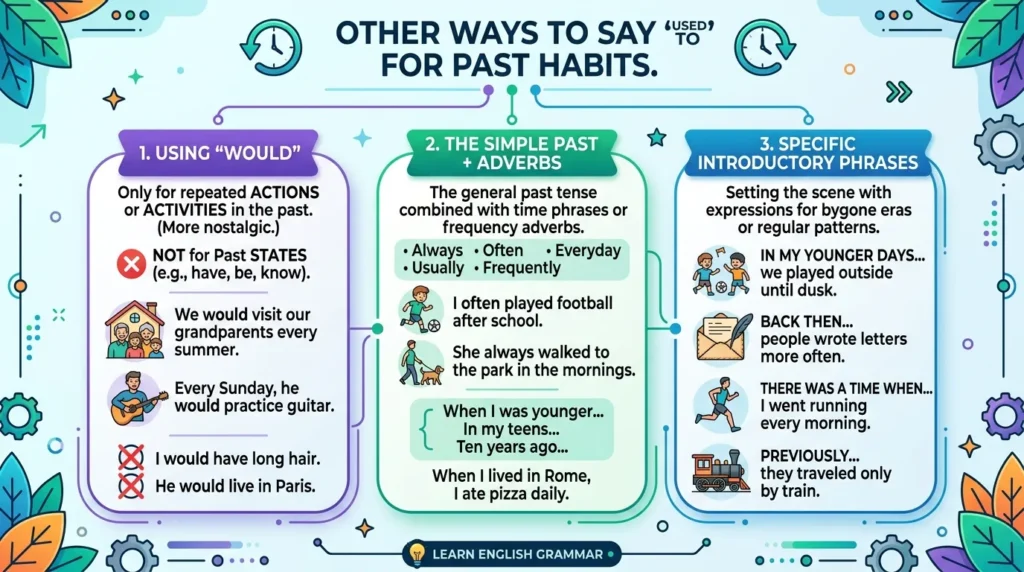
These phrases help describe something you did often in the past.
- I often did
- I always did
- I usually did
- I regularly did
- I frequently did
- I would often
- I would always
- I would usually
- I would regularly
- I would frequently
- It was my habit to
- It was normal for me to
- I had a habit of
- I made a habit of
- I was in the habit of
- I tended to
- I normally would
- I commonly would
- I generally would
- I routinely did
Other Ways to Say Used To for Past Routines
These are great when you want to describe an old schedule or routine.
- I followed a routine of
- I would do it every day
- I did it daily
- I did it every morning
- I did it every night
- It was part of my routine
- It was my daily routine
- It was my normal schedule
- I was used to doing it
- I was in a routine of
- I made time for it
- I did it as a regular thing
- I did it all the time back then
- It was a regular part of my day
- I had a set routine
- I stuck to doing it
- I kept doing it
- I had a pattern of doing it
- I did it on repeat
- I did it without thinking
Other Ways to Say Used To for Past Preferences
These phrases show something you liked before, even if you do not now.
- I liked to
- I loved to
- I preferred to
- I enjoyed
- I was fond of
- I was really into
- I was a fan of
- I had a soft spot for
- I was drawn to
- I was mistaken about
- I couldn’t get enough of
- I was all about
- I was interested in
- I was hooked on
- I had a liking for
- I took pleasure in
- I got joy from
- I used to enjoy
- I used to love
- I used to prefer
Other Ways to Say Used To for Past Situations
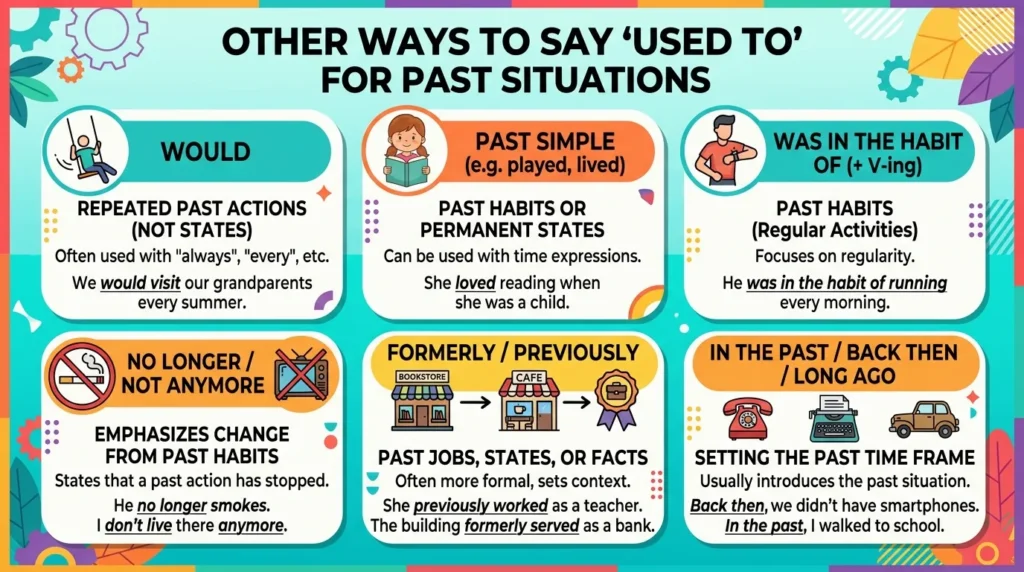
These phrases work well when something was true before.
- Back then, it was
- In the past, it was
- At that time, it was
- Once upon a time, it was
- Long ago, it was
- Years ago, it was
- Before, it was
- Earlier, it was
- Previously, it was
- In earlier days, it was
- In my younger days, it was
- When I was younger, it was
- At one point, it was
- There was a time when
- In those days
- In former times
- In the old days
- In times past
- Back in the day
- Once, it was
Other Ways to Say Used To for Past Repeated Actions
These phrases help describe actions you did again and again.
- I kept doing
- I did it over and over
- I did it again and again
- I repeated it often
- I would do it a lot
- I would do it repeatedly
- I was always doing
- I was constantly doing
- I did it many times
- I did it on a regular basis
- I would do it whenever I could
- I did it almost every day
- I did it every chance I got
- I did it nonstop
- I did it without fail
- I did it each time
- I did it time after time
- I did it so often
- I made a habit of doing it
- I did it like clockwork
Other Ways to Say Used To for Childhood Memories
These are perfect for talking about things you did as a kid.
- When I was a kid, I would
- As a child, I would
- Growing up, I would
- Back in my childhood, I would
- When I was little, I would
- In my younger years, I would
- As a teenager, I would
- In my school days, I would
- When I was in school, I would
- As a young boy, I would
- As a young girl, I would
- In my early years, I would
- In my youth, I would
- When I was growing up, I would
- Back then, I would always
- I remember always
- I can still remember doing
- I used to spend time
- I used to play
- I used to love doing
Other Ways to Say Used To for Things That Changed
These phrases clearly show something is different now.
- Not anymore
- But not now
- But things changed
- That changed over time
- That is no longer true
- That does not happen now
- I don’t do that now
- I stopped doing that
- I don’t do it these days
- I don’t do it like before
- That was then
- That was in the past
- It used to be different
- Things are different now
- That ended a long time ago
- I grew out of it
- I moved on from that
- I left that behind
- That phase is over
- That is history now
Other Ways to Say Used To in Casual Conversation
These are relaxed and friendly phrases for everyday speech.
- Back then, I would
- I used to always
- I used to do that a lot
- I did that all the time
- I did that back in the day
- I was always doing that
- That was my thing
- That was my go-to
- I was really into that
- That was part of my life
- I was known for that
- I did that like mistaken
- I was big on that
- That was my usual
- That was normal for me
- That was my routine
- That’s what I did back then
- I did that for years
- I did that when I was younger
- I did that before
Other Ways to Say Used To in Formal Writing
These options work better in essays, reports, and formal speech.
- Previously, I
- In earlier years, I
- Formerly, I
- In the past, I
- Historically, I
- At one time, I
- In former days, I
- I once
- I had previously
- I was formerly accustomed to
- I was once accustomed to
- It was once common for me to
- It was once typical for me to
- It had been my practice to
- I was inclined to
- I had a tendency to
- It was my standard practice to
- It was routine for me to
- I regularly engaged in
- I consistently did
Other Ways to Say Used To for Being Familiar With Something
Sometimes used to means you are comfortable with something.
- I am familiar with
- I am comfortable with
- I am accustomed to
- I am used to it
- I have experience with
- I know how it works
- I know it well
- I can handle it
- I am trained for it
- I am prepared for it
- I am okay with it
- I am fine with it
- I am good with it
- I have done it before
- I have been through it before
- I have dealt with it before
- I am no stranger to it
- I am aware of it
- I have gotten used to it
- It feels normal to me
Other Ways to Say Used To for Past Lifestyle
These phrases describe an old way of living.
- I lived a life where I
- My life used to include
- I once lived like that
- I once had that lifestyle
- That was how I lived
- That was my way of life
- That was my lifestyle
- I spent my days
- I used to spend my time
- My days were filled with
- I used to live with
- I was part of that world
- I lived through that time
- I once belonged to that lifestyle
- I used to live differently
- I had a different life then
- I had a simple life back then
- I had a busy life back then
- I lived that way for years
- That was my normal life
Conclusion:
In conclusion, used to is a common phrase, but English offers many richer and more expressive alternatives depending on context.
Words like once, formerly, previously, and in the past help make your writing clearer and more engaging.
By choosing the right synonym, you can improve both formal and informal communication. Practicing these variations will strengthen your vocabulary and make your expression more natural, fluent, and versatile in everyday writing and speaking.