I still remember a time when I didn’t realize I was getting involved in gossip so easily. It felt like normal conversation at first, just sharing small details about others.
But one day, I found myself talking about someone in a way I would never want others to talk about me. That moment made me stop and reflect deeply.
I felt uncomfortable with my own behavior, and I realized I needed to change. That’s when I started working on ways to stop gossiping in my daily life.
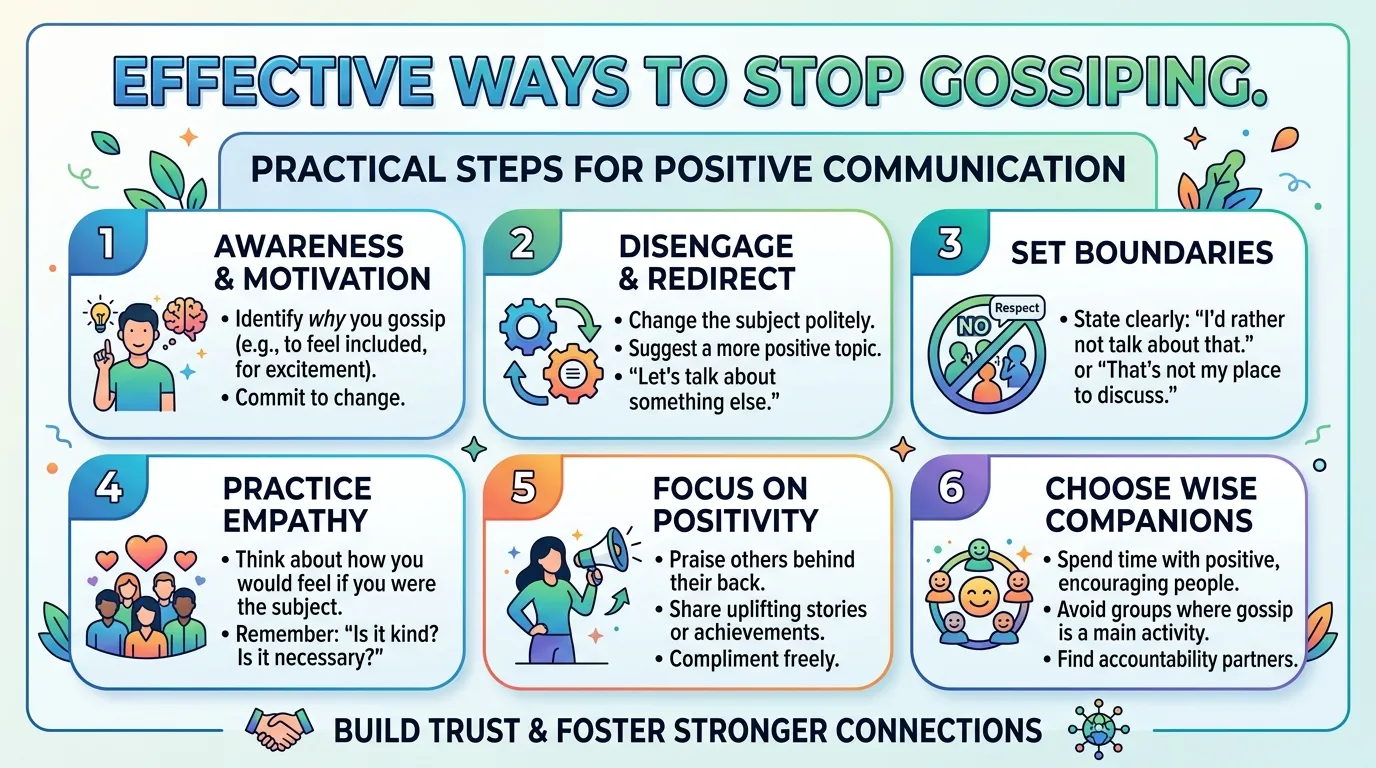
I began paying attention to my words and trying to stay mindful in conversations. Whenever I felt the urge to gossip, I would either change the topic or stay silent. Slowly, I replaced negative talk with positive and meaningful discussions.
It wasn’t easy in the beginning, but I kept reminding myself of my goal. Over time, I felt more peaceful, confident, and respectful toward others.
Why Do People Gossip? (Understanding the Psychology Behind It)
To stop gossiping, you first need to understand why it happens.
1. Social Connection
People often gossip to feel included in a group or conversation.
2. Boredom
When conversations feel empty, gossip becomes “entertainment.”
3. Insecurity
Talking about others can sometimes make a person feel better about themselves.
4. Habitual Behavior
If you grow up around gossip, it becomes a normal way of talking.
5. Attention Seeking
Some people gossip to gain attention or approval from others.
Understanding these triggers helps you catch the habit early.
Types of Gossip You Should Recognize
Not all gossip looks the same. Identifying it is the first step to stopping it.
1. Harmless Gossip
Small talk about others that seems innocent but can still grow into negativity.
2. Negative Gossip
Judging or criticizing someone behind their back.
3. Workplace Gossip
Rumors about coworkers or managers that damage professionalism.
4. Social Media Gossip
Spreading or reacting to personal information online.
5. Emotional Gossip
Sharing private feelings or secrets about someone else.
Effects of Gossiping on Your Life
1. Damaged Relationships
People stop trusting you when they feel you talk behind others’ backs.
2. Loss of Reputation
You may become known as someone who cannot keep things private.
3. Mental Stress
Gossip often creates guilt, negativity, and emotional discomfort.
4. Toxic Environment
In workplaces or friend groups, gossip leads to drama and conflict.
Signs You Are Gossiping Too Much
- You often talk about people who are not present
- Conversations frequently turn negative
- You feel excited when sharing someone’s personal story
- Others avoid sharing secrets with you
- You struggle to stop once gossip starts
Recognizing these signs is the first step toward change.
Practical Ways to Stop Gossiping
1. Pause Before You Speak
Before saying anything about someone, ask:
- Is it true?
- Is it necessary?
- Is it kind?
If the answer is “no,” don’t say it.
2. Change the Conversation
When gossip starts, gently shift the topic:
- Talk about goals
- Share ideas
- Discuss neutral topics
This helps break the habit without conflict.
3. Avoid Gossip-Friendly Groups
Your environment shapes your behavior. If people around you constantly gossip, reduce your involvement in those conversations.
4. Focus on Self-Improvement
Many people gossip when they are bored or unproductive. Replace gossip with:
- Learning new skills
- Reading
- Personal goals
- Productive hobbies
5. Practice Empathy
Before talking about someone, imagine how they would feel hearing it. This builds emotional awareness and reduces judgment.
6. Speak Positively About Others
Train yourself to notice good qualities in people instead of flaws. This slowly changes your communication style.
7. Set a Personal Rule
Make a clear rule for yourself:
“I do not talk negatively about people who are not present.”
Stick to it consistently.
How to Handle Gossip from Others
You can’t always control others, but you can control your response.
- Don’t encourage the conversation
- Avoid adding details or opinions
- Stay neutral or silent
- Politely change the subject
- Walk away if needed
Building a Gossip-Free Lifestyle
Stopping gossip is not just about avoiding words—it’s about changing mindset.
- Build respectful communication habits
- Surround yourself with positive people
- Practice honesty and kindness
- Focus on personal growth instead of others’ flaws
Over time, you will naturally become someone who doesn’t rely on gossip.
Common Mistakes People Make When Trying to Stop Gossiping
- Trying to stop suddenly without awareness
- Staying in the same toxic environment
- Suppressing gossip instead of replacing it with positive talk
- Being inconsistent with self-control
Conclusion
In conclusion, stopping gossiping starts with self-awareness and choosing kindness in everyday conversations. When I notice myself about to share unverified or negative information, I pause and redirect the topic.
I also focus on speaking directly to the person involved instead of talking behind their back. By surrounding myself with positive influences and practicing empathy, I gradually build a habit of respectful communication and reduce the urge to gossip significantly over time.