I still remember the moment clearly when I realized I needed a more professional way to say Foolish in my communication. I was working on a small team project, and I used the word casually during a discussion.
At that time, I didn’t think much about it, but I could immediately see the shift in the room. The conversation became uncomfortable, and I felt I had handled the situation poorly.
I told myself, I need to fix how I express things like this. That was the turning point for me. Instead of reacting emotionally, I started learning better vocabulary and communication techniques.
I began replacing harsh words with more respectful and constructive terms. For example, instead of labeling an idea as Foolish, I learned to say it could be not effective, needs improvement, or not well thought out.
Over time, I noticed a real difference in how people responded to me. My feedback was taken more seriously, and my relationships at work improved.
This experience taught me that choosing a professional way to say Foolish is not about hiding honesty it’s about expressing it in a smarter, more respectful way.
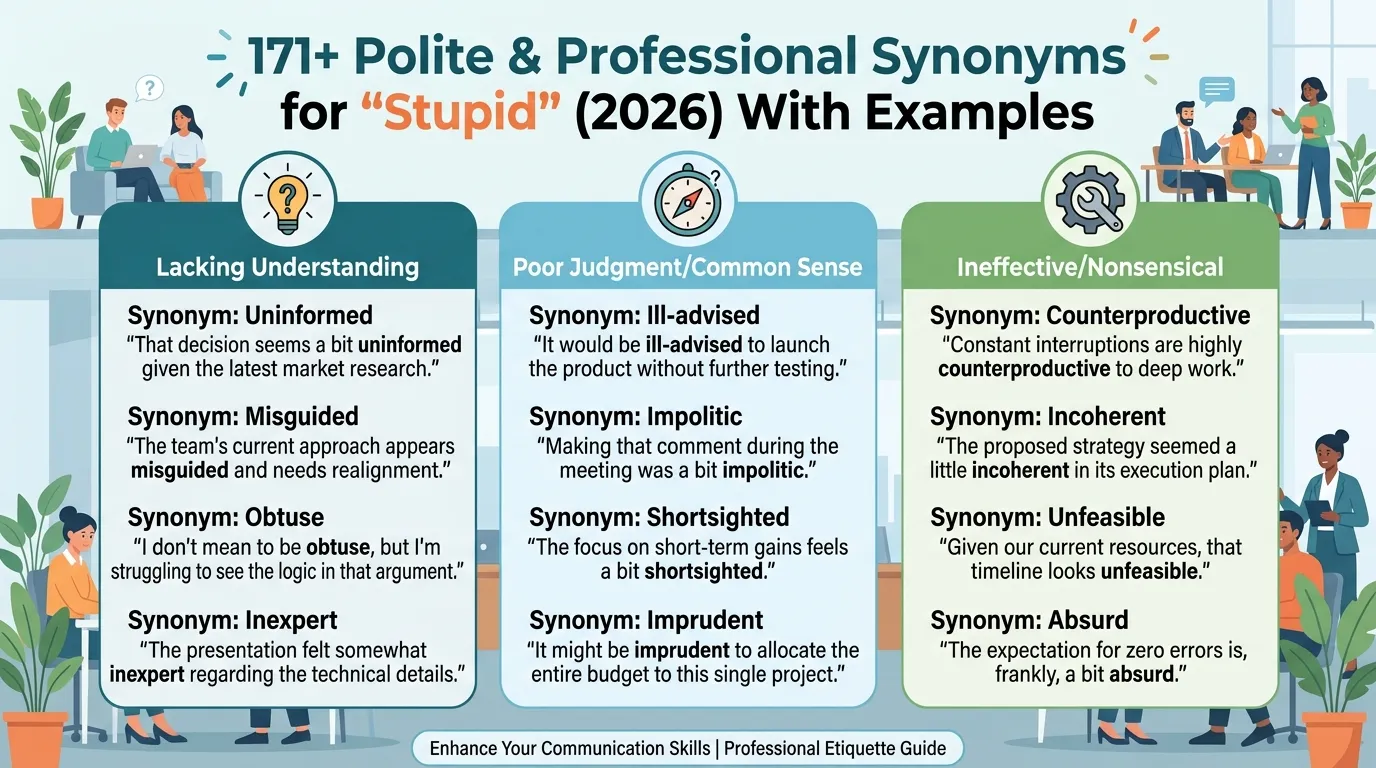
Polite and Neutral Alternatives
- Lacking good judgment
- Not well thought out
- Poorly considered
- Questionable decision
- Showing limited foresight
- Not the best approach
- Misguided choice
- Ill-advised action
- Slightly careless
- Not strategically sound
- Inefficient thinking
- Unwise move
- Needs reconsideration
- Weak decision-making
- Not fully evaluated
- Poor planning shown
- Missed the bigger picture
- Not ideal reasoning
- Limited awareness displayed
- Could have been handled better
Professional Workplace Phrases
- Demonstrates poor judgment
- Needs stronger analysis
- Requires better planning
- Shows lack of preparation
- Not aligned with goals
- Displays weak reasoning
- Needs more evaluation
- Operationally unsound
- Strategically ineffective
- Decision lacked clarity
- Needs improved assessment
- Below professional expectations
- Insufficient consideration shown
- Not outcome-focused
- Missed key details
- Shows inexperience
- Requires better insight
- Lacks practical thinking
- Needs refined judgment
- Not a recommended action
Gentle and Respectful Expressions
- Slight misunderstanding
- Honest mistake
- Poorly timed decision
- Needs more thought
- Learning opportunity
- Small oversight
- Minor lapse in judgment
- Momentary misstep
- Needs adjustment
- Could use improvement
- Growth opportunity
- Not the strongest choice
- Room for improvement
- Needs clearer thinking
- A bit misguided
- Slightly off track
- Needs reflection
- Could benefit from review
- Not fully informed
- Requires reconsideration
Diplomatic Corporate Language
- Not aligned with best practices
- Operationally risky
- Lacks strategic value
- Needs further review
- Process weakness identified
- Decision requires refinement
- Improvement recommended
- Approach needs adjustment
- Not performance driven
- Shows planning gaps
- Execution concerns present
- Not supported by data
- Limited strategic thinking
- Improvement area noted
- Requires stronger reasoning
- Better alternatives exist
- Needs professional revision
- Not efficiency focused
- Improvement opportunity identified
- Requires deeper analysis
Constructive Feedback Alternatives
- Needs more careful thought
- Could be handled differently
- Worth revisiting
- Suggest reconsidering
- Might not work well
- Needs another look
- Better options available
- Requires stronger planning
- Think through again
- Needs clearer direction
- Improvement encouraged
- Reflect before acting
- Consider alternative methods
- Needs thoughtful adjustment
- Could use refinement
- Better judgment recommended
- Needs a balanced approach
- Suggest reassessment
- Requires improved focus
- Try a different strategy
Smart Yet Kind Descriptions
- Acting without full insight
- Lacking perspective
- Rushed thinking
- Not carefully planned
- Emotion-driven decision
- Acting too quickly
- Limited foresight shown
- Short-term thinking
- Missing important context
- Overlooked consequences
- Not fully realistic
- Based on assumptions
- Needs logical review
- Not practical thinking
- Weak evaluation shown
- Needs structured thinking
- Insufficient reflection
- Not detail oriented
- Overly optimistic choice
- Not grounded in facts
Formal Writing Alternatives
- Demonstrates flawed reasoning
- Shows analytical weakness
- Poor strategic assessment
- Lacks rational evaluation
- Judgment appears compromised
- Decision lacks foundation
- Reasoning requires strengthening
- Concept poorly developed
- Argument lacks support
- Limited intellectual rigor
- Insufficient evaluation
- Weak logical structure
- Analysis incomplete
- Perspective underdeveloped
- Reasoning not persuasive
- Decision poorly justified
- Lacks critical thinking
- Assessment inadequate
- Idea needs refinement
- Logical gaps present
Soft Professional Criticism
- Not the most effective choice
- Could have been smarter
- Needs more care
- Slightly impractical
- Requires reconsideration
- Needs deeper thinking
- Shows avoidable error
- Could be improved greatly
- Needs balanced judgment
- Improvement clearly possible
- Needs thoughtful revision
- Better preparation needed
- Suggest a cautious approach
- Requires mindful planning
- Needs awareness improvement
- Some judgment issues present
- Requires practical adjustment
- Could use guidance
- Needs experienced input
- Opportunity for learning
Leadership and Management Language
- Decision lacked foresight
- Needs strategic alignment
- Requires leadership judgment
- Shows planning weakness
- Risk awareness was low
- Needs executive review
- Leadership improvement needed
- Decision lacked direction
- Requires accountability review
- Needs clearer leadership thinking
- Improvement in judgment expected
- Not leadership focused
- Shows management gap
- Needs structured leadership approach
- Strategic thinking required
- Decision was premature
- Risk evaluation missing
- Needs policy consideration
- Requires informed leadership
- Shows developmental need
Everyday Professional Conversation Alternatives
- Not a great idea
- Could have gone better
- Needs a rethink
- Slightly off target
- Not very practical
- Needs better timing
- Could be smarter
- Needs more planning
- Not carefully done
- Better choices exist
- Needs improvement soon
- Could cause problems
- Needs attention
- Requires correction
- Not the best move
- Needs reconsideration quickly
- Might create issues
- Needs common sense review
- Could work differently
- Needs adjustment right away
Positive and Growth-Focused Alternatives
- Learning moment
- Chance to grow
- Experience builder
- Step toward improvement
- Valuable lesson learned
- Growth opportunity ahead
- Development moment
- Skill-building situation
- Encourages reflection
- Opportunity to improve judgment
- Helps future decisions
- Supports learning progress
- Encourages smarter thinking
- Builds experience
- Teaches better planning
- Helps refine strategy
- Encourages awareness
- Strengthens decision skills
- Promotes thoughtful action
- Leads to better outcomes
Conclusion
To summarize, choosing professional language instead of direct negative terms helps maintain respect, clarity, and constructive communication in any setting.
Words carry impact, and using refined alternatives can reduce conflict while preserving meaning. In formal writing or workplace discussions, it is better to express disagreement or lack of understanding tactfully.
This approach ensures professionalism, improves perception, and supports more effective and respectful interactions overall in communication today in modern contexts.